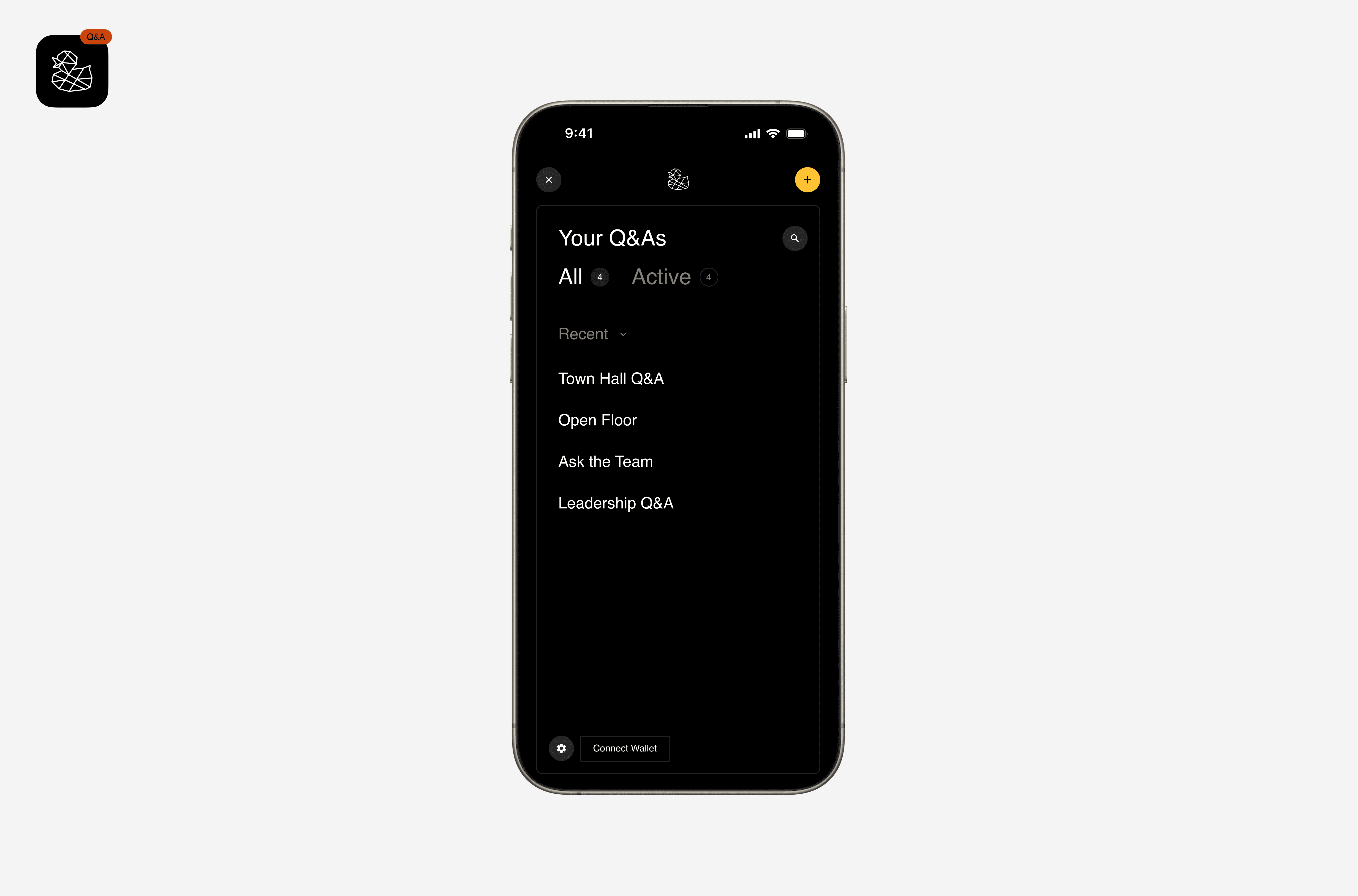
Qaku is a Web3-based Q&A platform that originated as an internal tool within the Status/Waku ecosystem, with ambitions to evolve into a public-facing product for the broader Web3 community. Version 1 was functional but built quickly — and the interface reflected that. Role ambiguity, cluttered navigation, and friction-heavy creation flows were limiting usability and making the product difficult to scale.
I led the UX and UI redesign end-to-end, working closely with stakeholders, developers, and graphic designers. Public release was subsequently deprioritised as product strategy shifted, which was outside the scope of the design work.
Qaku is a Web3-based Q&A platform that originated as an internal tool and later evolved toward a public-facing product.
I led the UX and UI redesign, conducting product research and redefining core flows to make the platform clearer, more intuitive, and scalable for broader adoption.
Working closely with stakeholders and developers under tight timelines, I translated complex Web3 mechanics into a high-fidelity interface that prioritized usability and clarity.
The MVP was successfully launched internally on Vercel and is currently progressing toward full public implementation.
Deliverables
Deliverables
Product Design
Product Design
Year
Year
2025—2026
2025—2026
Credits
Waku
Waku
The Problem
Four core issues defined the redesign scope.
A unified interface for hosts and participants created role ambiguity — both user types were looking at the same screens, creating unnecessary cognitive load and confusion about what actions belonged to whom.
The creation flow was overloaded. Too many inputs upfront, no clear prioritization, and no progressive structure meant users had to work harder than necessary to complete basic tasks.
The Q&A management experience lacked hierarchy. There was no clear way to track activity, moderate responses, or get a read on performance at a glance.
Navigation was cluttered with low-value entries that diluted focus and weakened the overall information architecture.
Four core issues defined the redesign scope.
A unified interface for hosts and participants created role ambiguity — both user types were looking at the same screens, creating unnecessary cognitive load and confusion about what actions belonged to whom.
The creation flow was overloaded. Too many inputs upfront, no clear prioritization, and no progressive structure meant users had to work harder than necessary to complete basic tasks.
The Q&A management experience lacked hierarchy. There was no clear way to track activity, moderate responses, or get a read on performance at a glance.
Navigation was cluttered with low-value entries that diluted focus and weakened the overall information architecture.
Research & Approach
I started with a structured audit of the existing product — mapping primary workflows including Q&A and poll creation, scheduling and publishing, real-time answer management, and crypto wallet integration.
I used Slido as a reference benchmark for live Q&A interaction patterns — not to replicate it, but to identify gaps in clarity and flow efficiency relative to an established standard. I also ran internal interviews with the Waku team to understand real-world use cases and operational constraints, and worked directly with developers to map technical dependencies before moving into structural redesign.
I started with a structured audit of the existing product — mapping primary workflows including Q&A and poll creation, scheduling and publishing, real-time answer management, and crypto wallet integration.
I used Slido as a reference benchmark for live Q&A interaction patterns — not to replicate it, but to identify gaps in clarity and flow efficiency relative to an established standard. I also ran internal interviews with the Waku team to understand real-world use cases and operational constraints, and worked directly with developers to map technical dependencies before moving into structural redesign.
Before vs After
Before vs After
Design Decisions
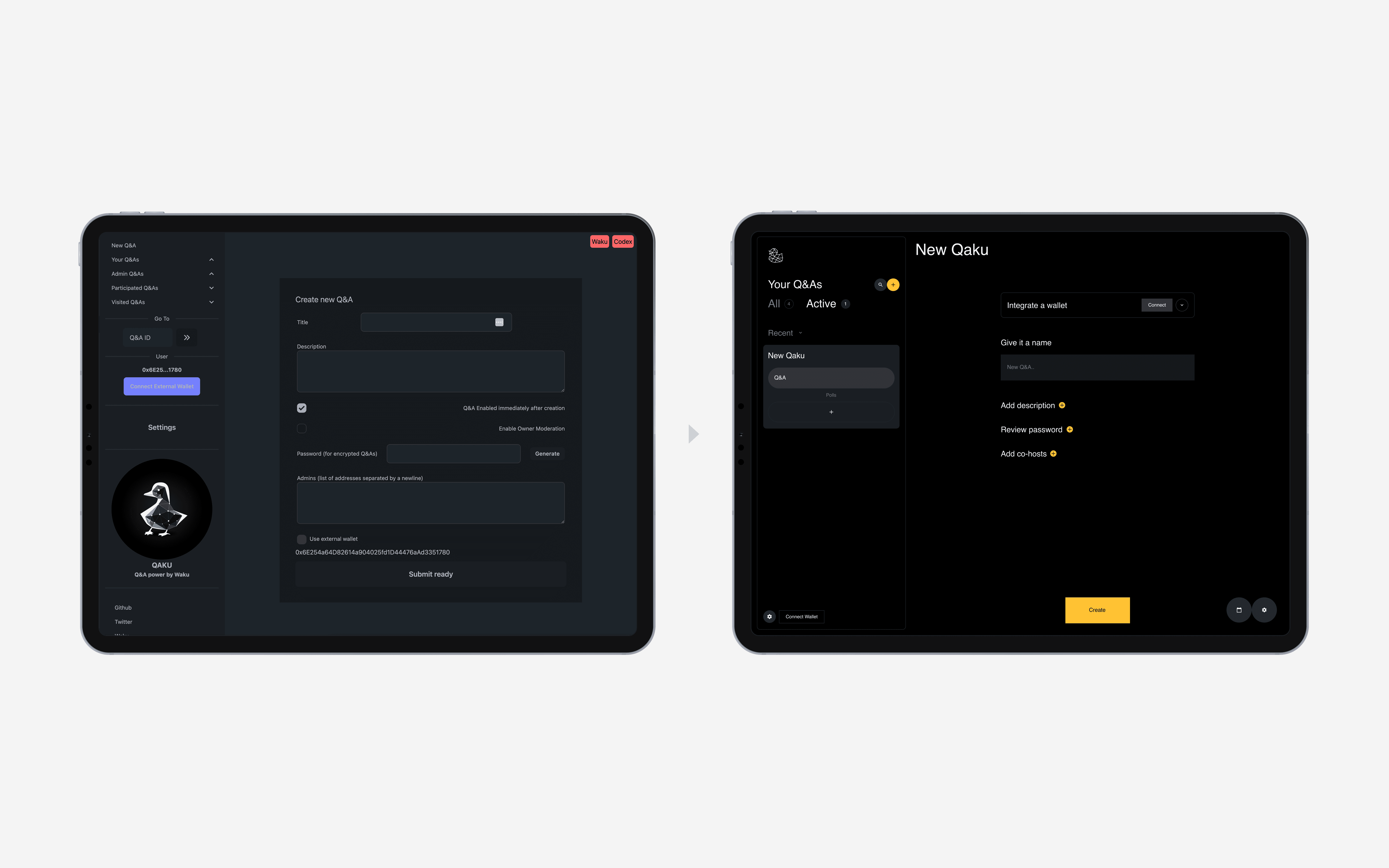
The core structural change was separating host and participant flows. Distinct role-based paths eliminated the ambiguity that had made v1 confusing for both user types — each role now has a clear context, clear actions, and no interface noise from the other.
The creation flow was rebuilt around progressive disclosure. Primary inputs surface first; secondary options are revealed as needed. This alone significantly reduced the cognitive load of getting a Q&A session live. Form patterns were also standardized across workflows, reducing the learning curve between different parts of the product.
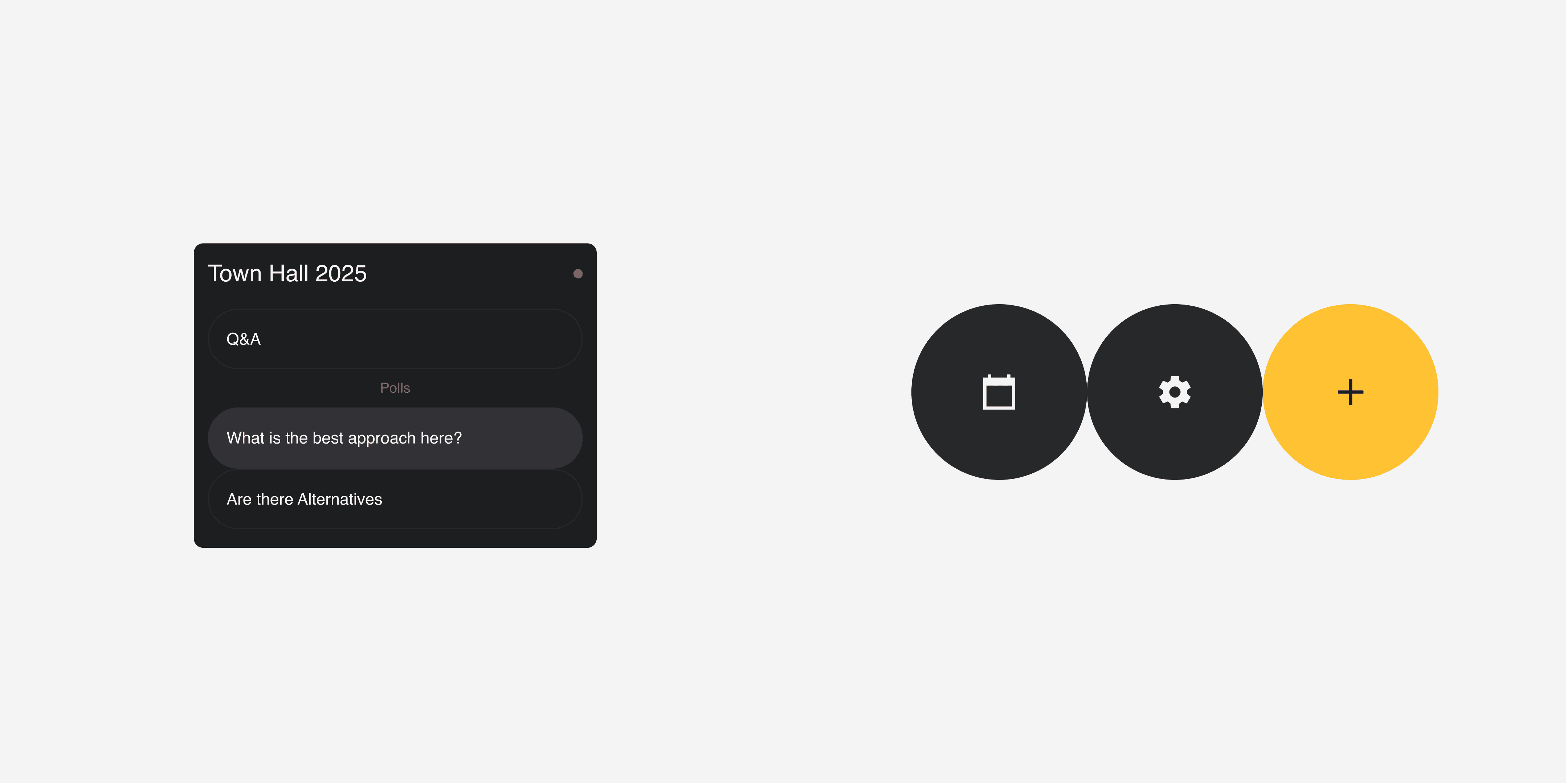
The management experience was redesigned with dedicated detail views, performance metrics, and clearer moderation controls — giving hosts the visibility they needed to run sessions confidently. Navigation was reduced to two core states, removing redundant entries and sharpening focus throughout.
Search and date-based filtering were introduced to support content retrieval at scale. A modular widget system was developed to enable Q&A interaction across devices and contexts without requiring a full product instance.
The core structural change was separating host and participant flows. Distinct role-based paths eliminated the ambiguity that had made v1 confusing for both user types — each role now has a clear context, clear actions, and no interface noise from the other.
The creation flow was rebuilt around progressive disclosure. Primary inputs surface first; secondary options are revealed as needed. This alone significantly reduced the cognitive load of getting a Q&A session live. Form patterns were also standardized across workflows, reducing the learning curve between different parts of the product.
The management experience was redesigned with dedicated detail views, performance metrics, and clearer moderation controls — giving hosts the visibility they needed to run sessions confidently. Navigation was reduced to two core states, removing redundant entries and sharpening focus throughout.
Search and date-based filtering were introduced to support content retrieval at scale. A modular widget system was developed to enable Q&A interaction across devices and contexts without requiring a full product instance.
Visual System
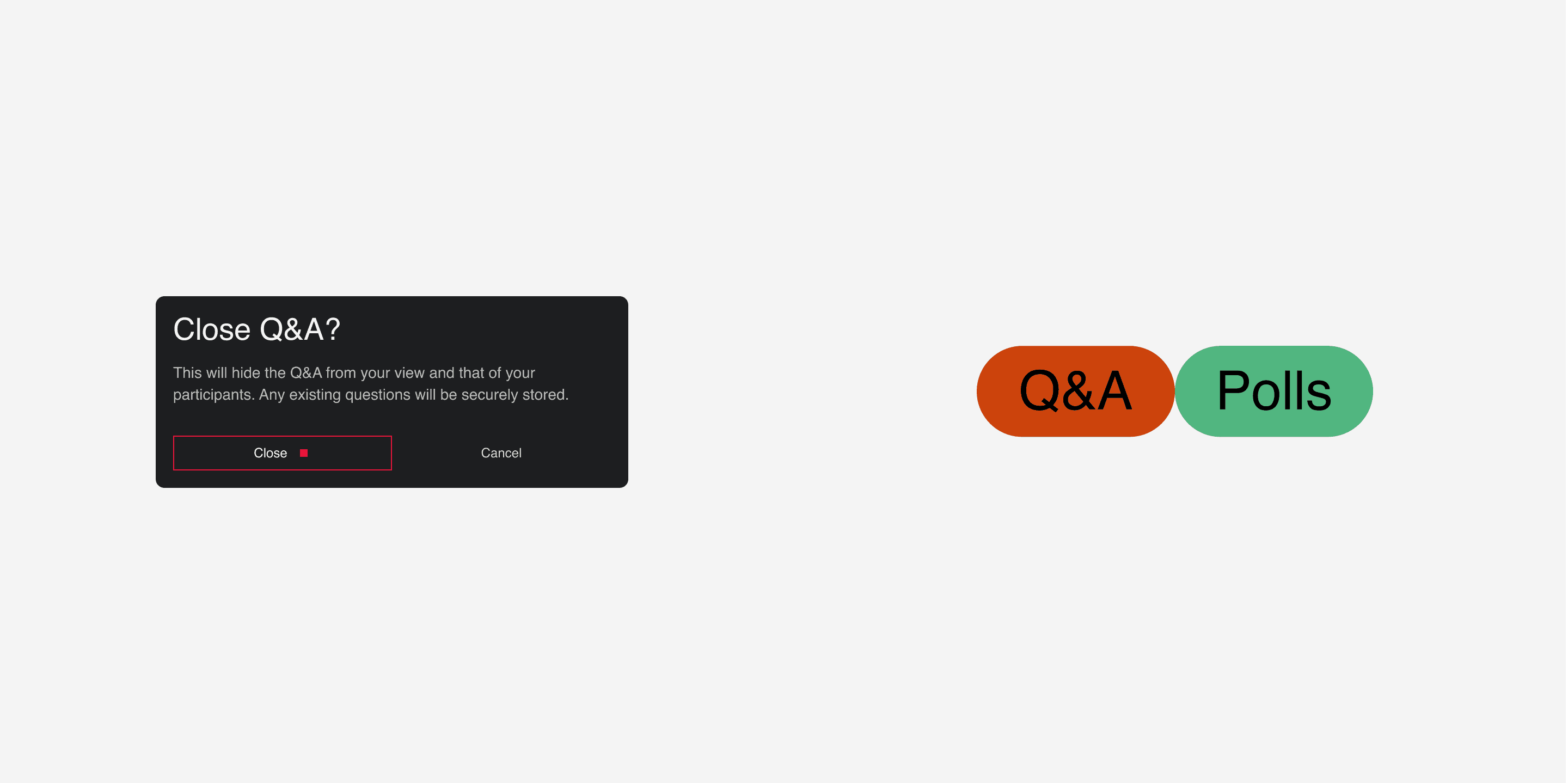
As the platform moved toward a public-facing product, visual direction became a strategic decision rather than a surface-level one. Working with the graphic design team, we established a restrained monochrome foundation — reinforcing clarity and reducing visual noise so the interface stays focused on content and interaction. Yellow was introduced as a functional accent, applied specifically to primary actions and interactive states to guide user behavior without decorative overuse.
That visual language was then formalized into a scalable design system: reusable UI components, color tokens, and typographic variables that improved consistency across flows, reduced developer handoff friction, and gave the product a foundation it can grow into.
As the platform moved toward a public-facing product, visual direction became a strategic decision rather than a surface-level one. Working with the graphic design team, we established a restrained monochrome foundation — reinforcing clarity and reducing visual noise so the interface stays focused on content and interaction. Yellow was introduced as a functional accent, applied specifically to primary actions and interactive states to guide user behavior without decorative overuse.
That visual language was then formalized into a scalable design system: reusable UI components, color tokens, and typographic variables that improved consistency across flows, reduced developer handoff friction, and gave the product a foundation it can grow into.
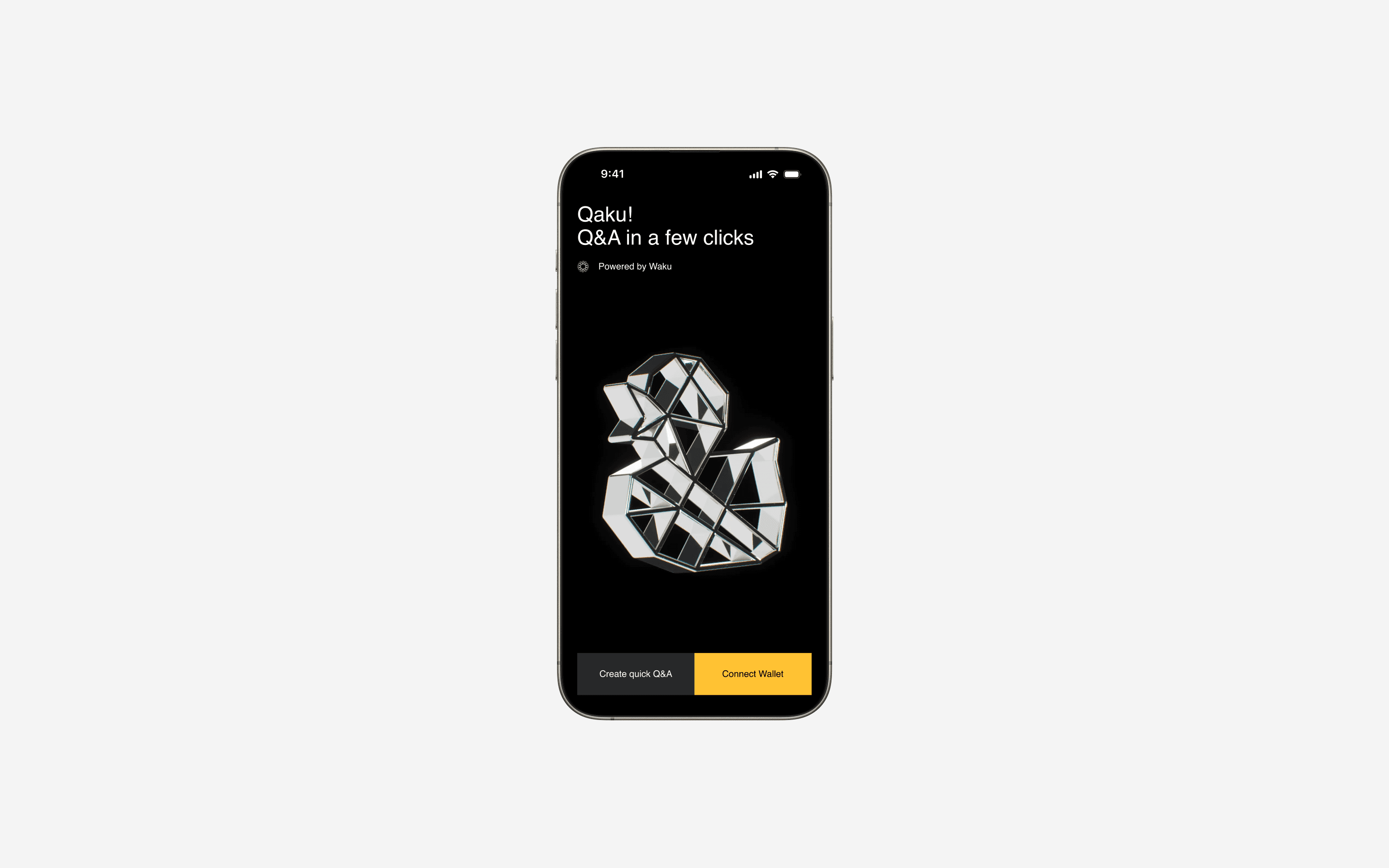
Mobile Landing page
Mobile Landing page
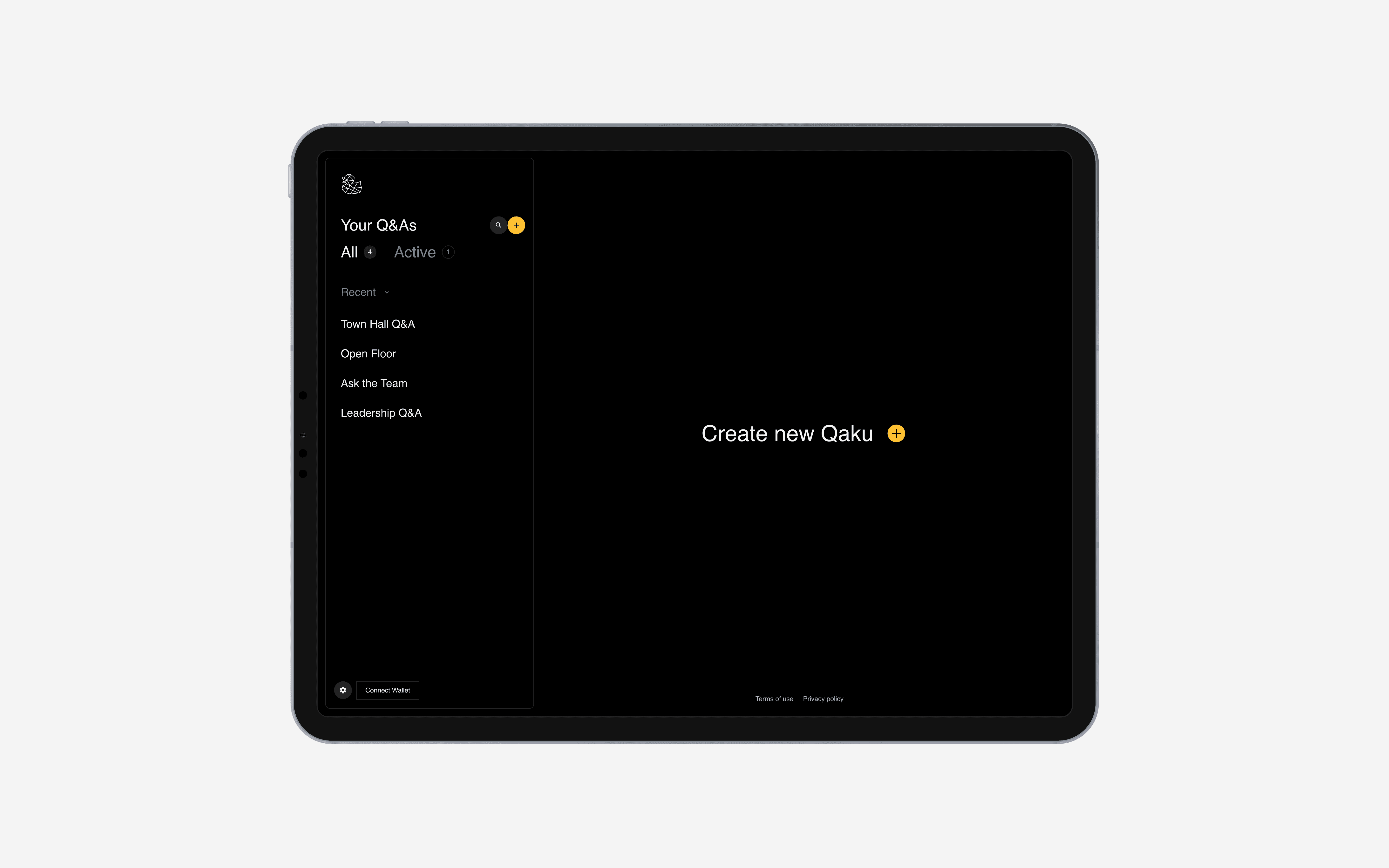
Home page
Home page
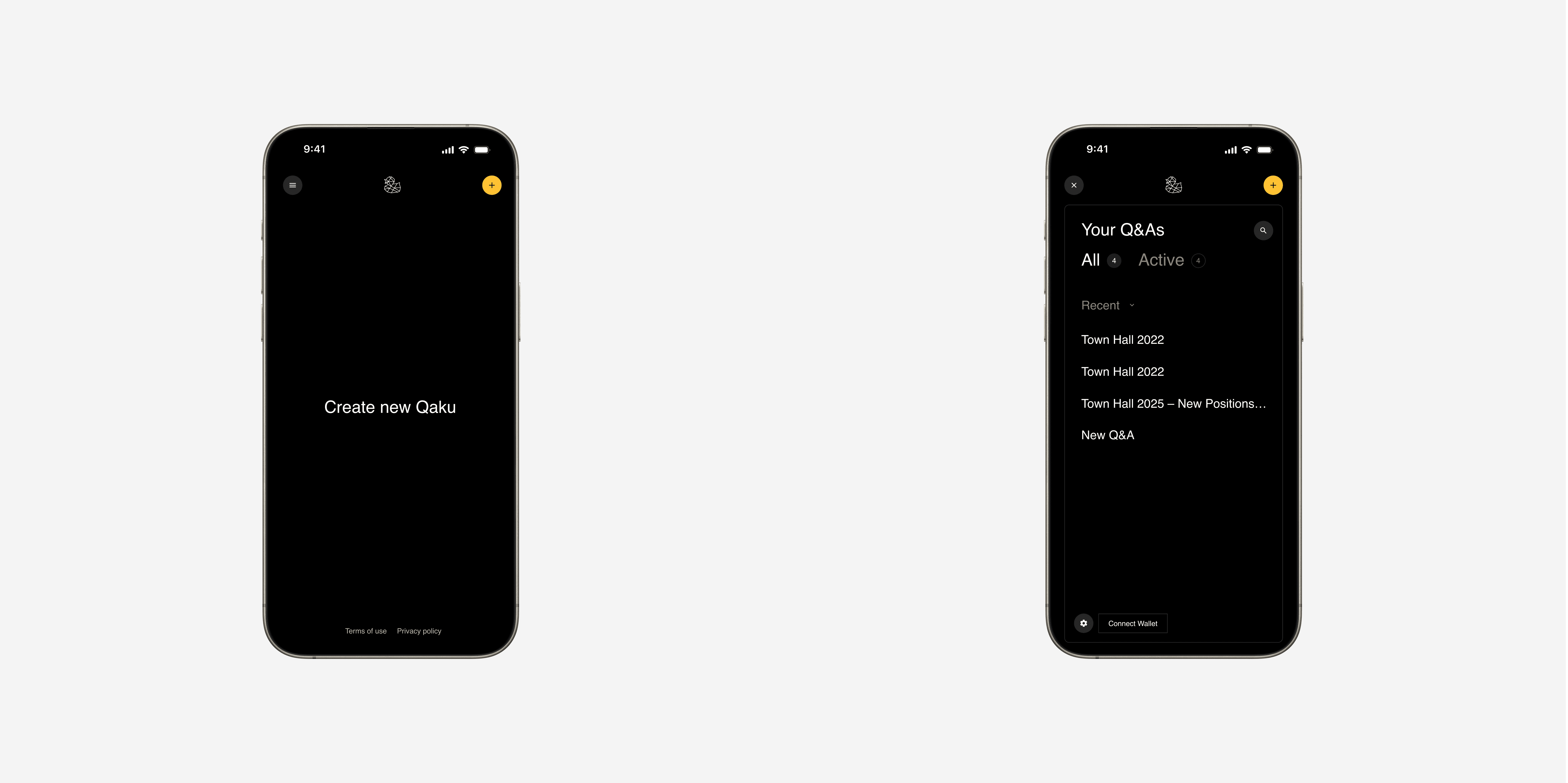
Mobile Home page
Mobile Home page
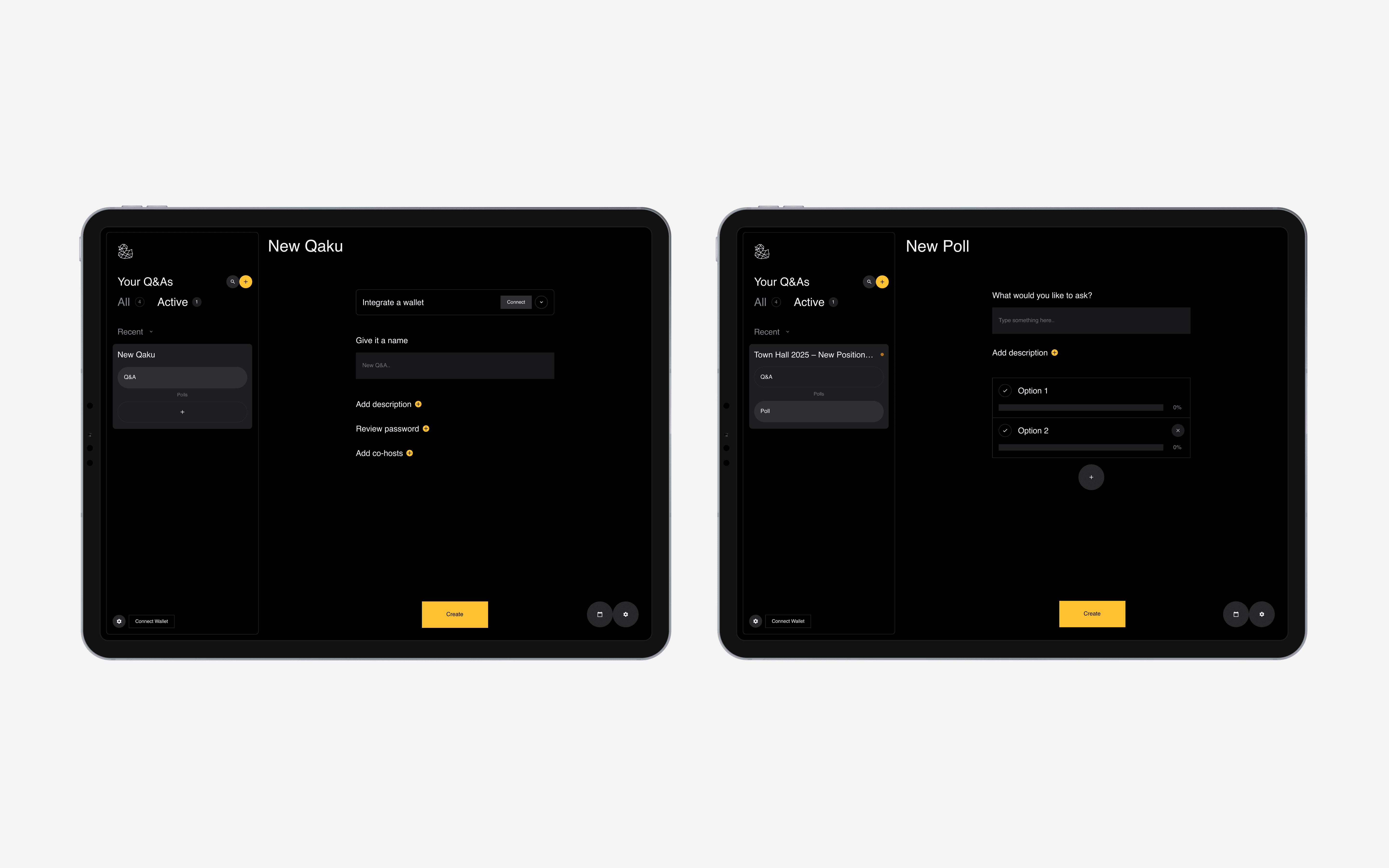
Q&A and Polls creation flow
Q&A and Polls creation flow
Testing & Iterating
Following implementation, I reviewed the product with the team and identified areas where the visual hierarchy didn't match intended user priority. The most significant was the Integrate Wallet panel — visually prominent by virtue of its placement and contrast, but functionally a secondary action for most users. It was drawing attention at the wrong moment in the flow, creating hesitation before users had engaged with the core experience.
The hierarchy was rebalanced in a subsequent pass, deprioritising the wallet panel visually and redirecting focus toward primary workflows.
Following implementation, I reviewed the product with the team and identified areas where the visual hierarchy didn't match intended user priority. The most significant was the Integrate Wallet panel — visually prominent by virtue of its placement and contrast, but functionally a secondary action for most users. It was drawing attention at the wrong moment in the flow, creating hesitation before users had engaged with the core experience.
The hierarchy was rebalanced in a subsequent pass, deprioritising the wallet panel visually and redirecting focus toward primary workflows.
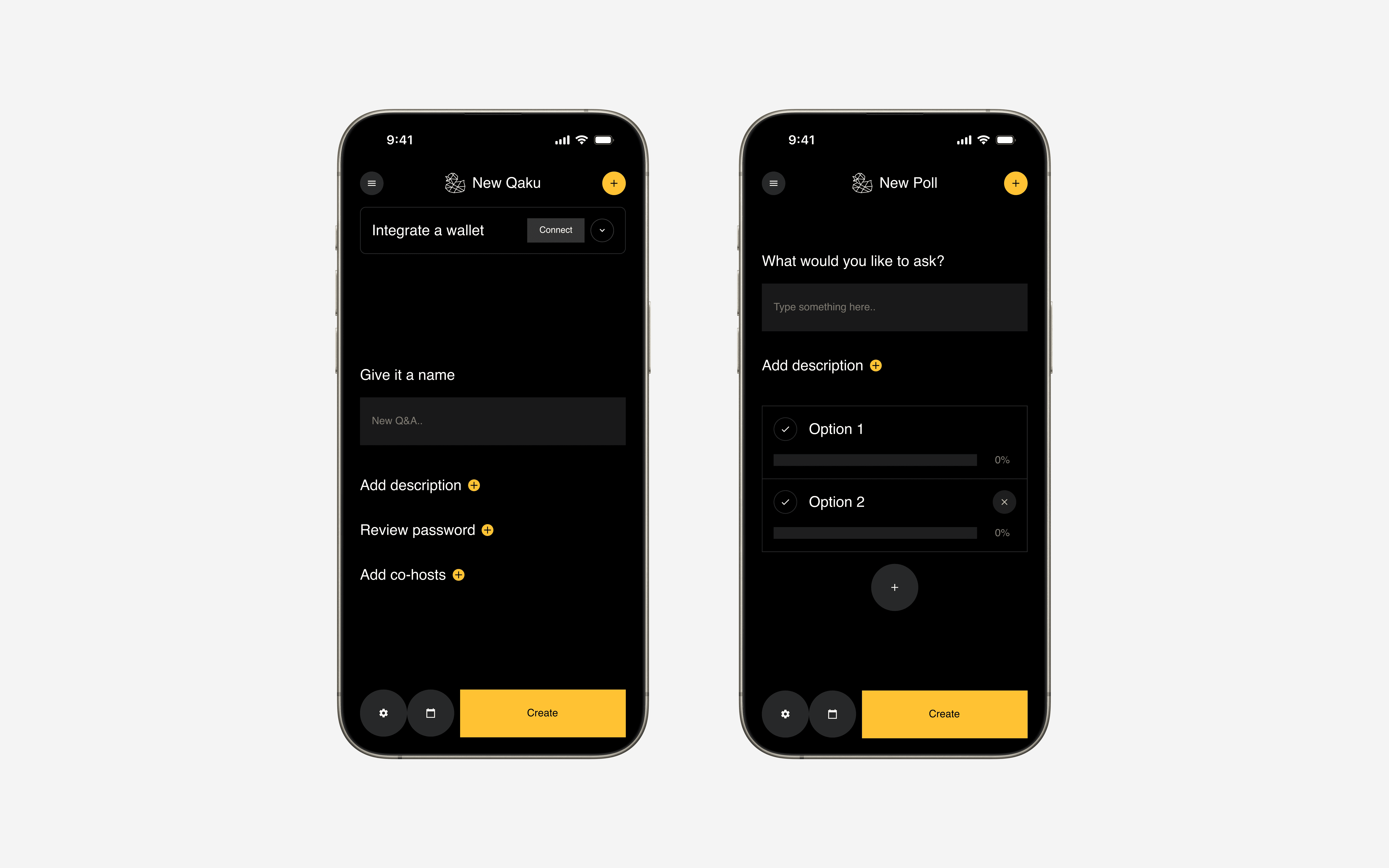
Mobile Q&A and Polls creation flow
Mobile Q&A and Polls creation flow
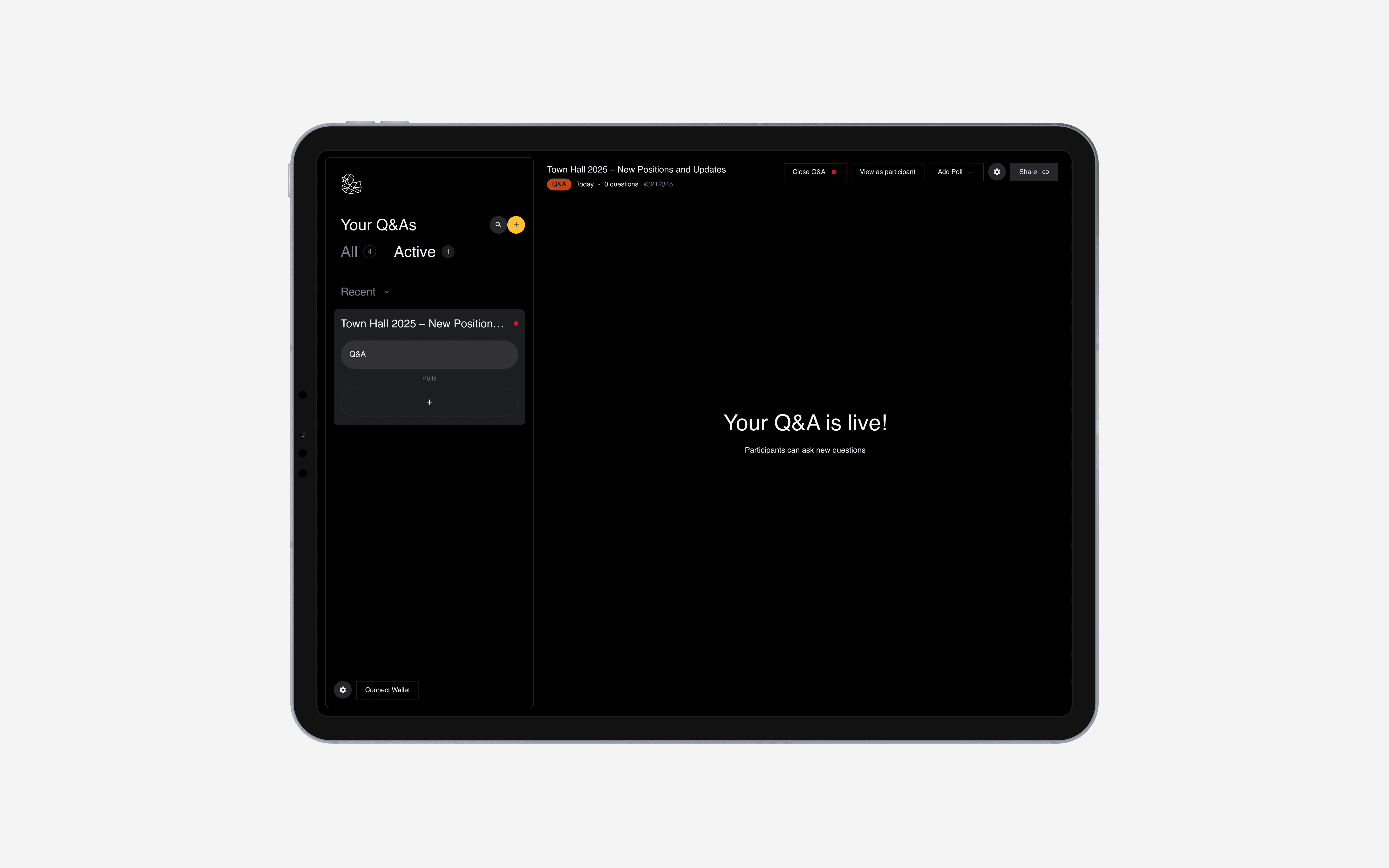
Published Q&A
Published Q&A
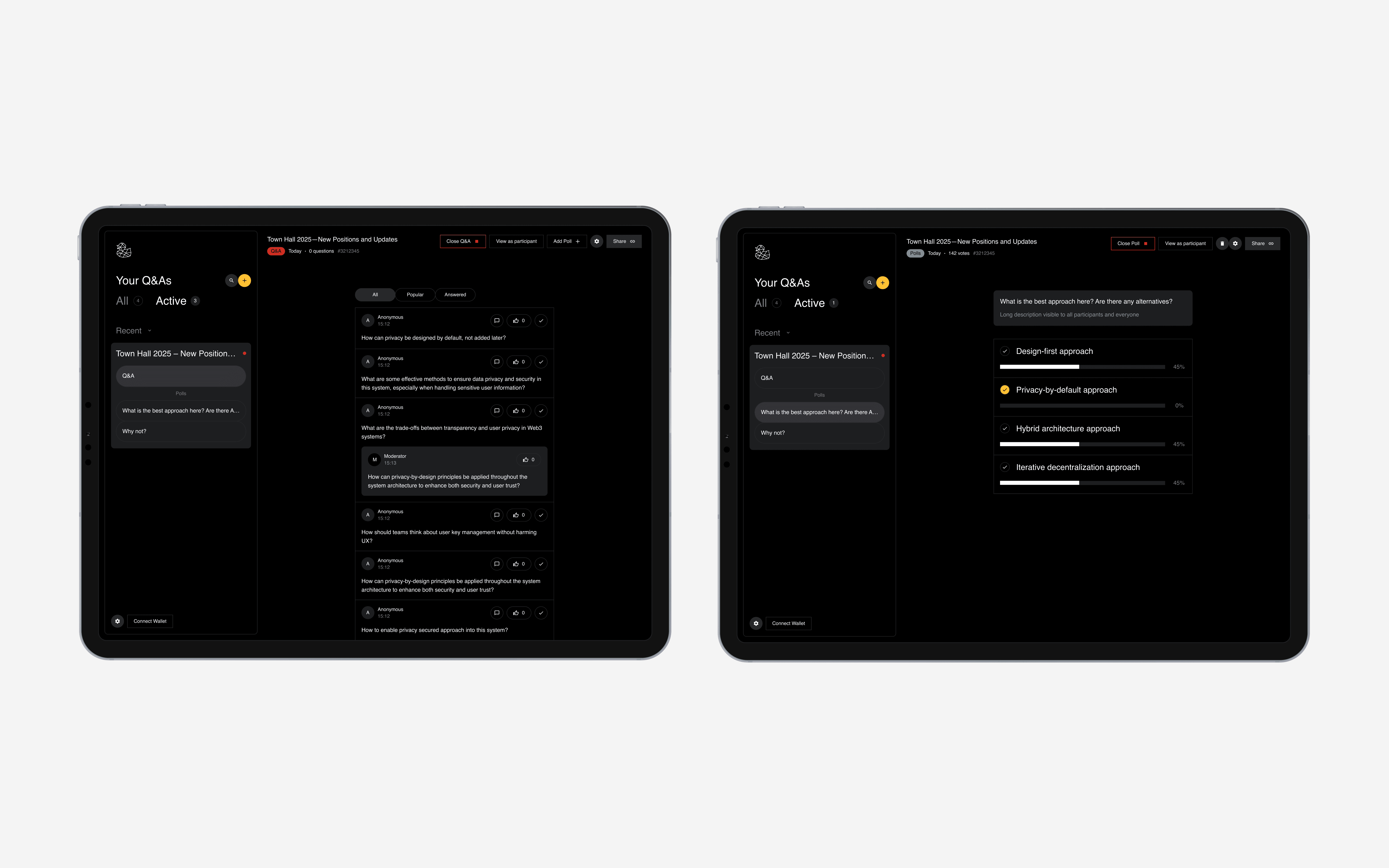
Q&A and Polls live
Q&A and Polls live
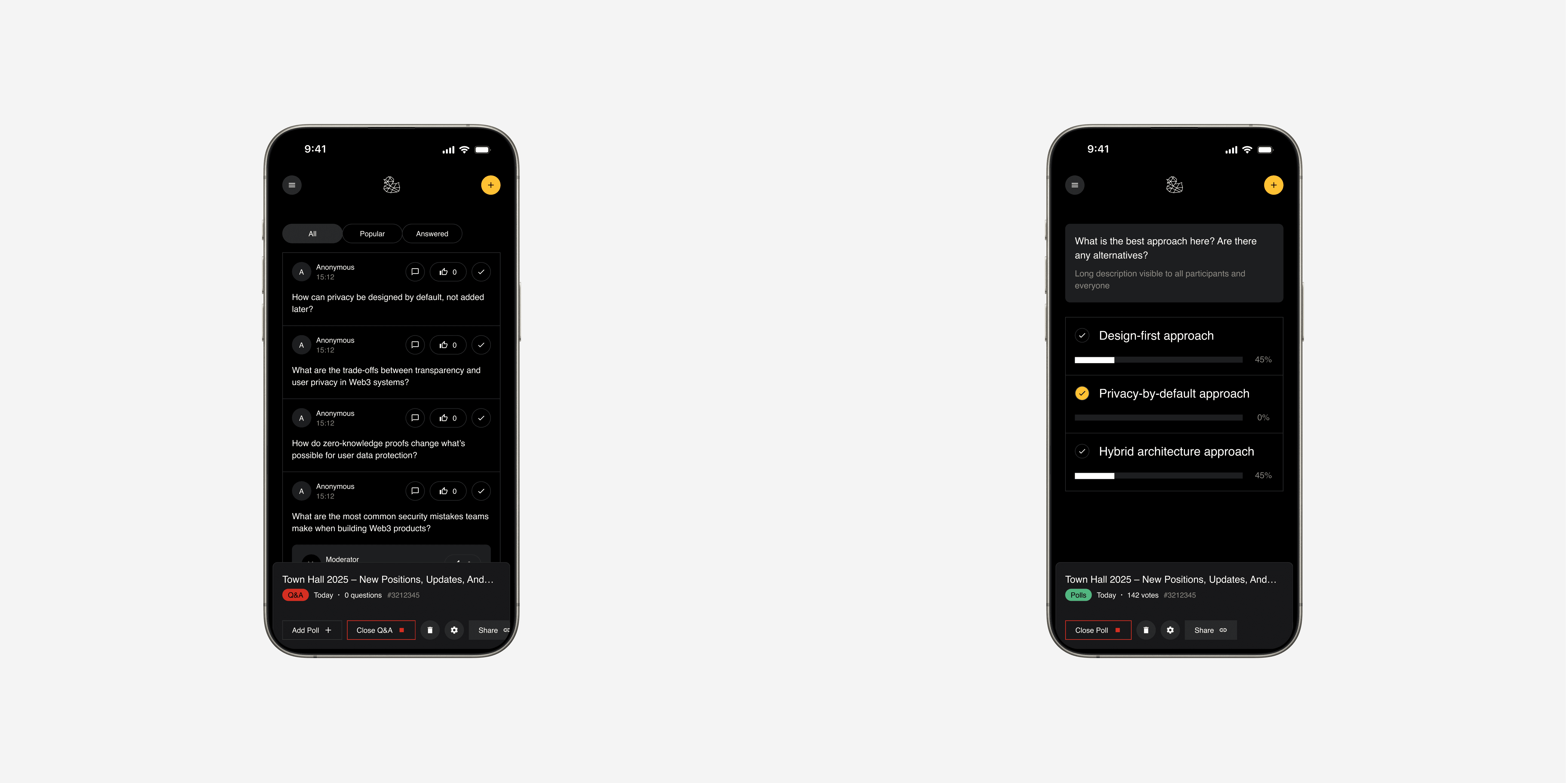
Mobile Published Q&A and Polls
Mobile Published Q&A and Polls
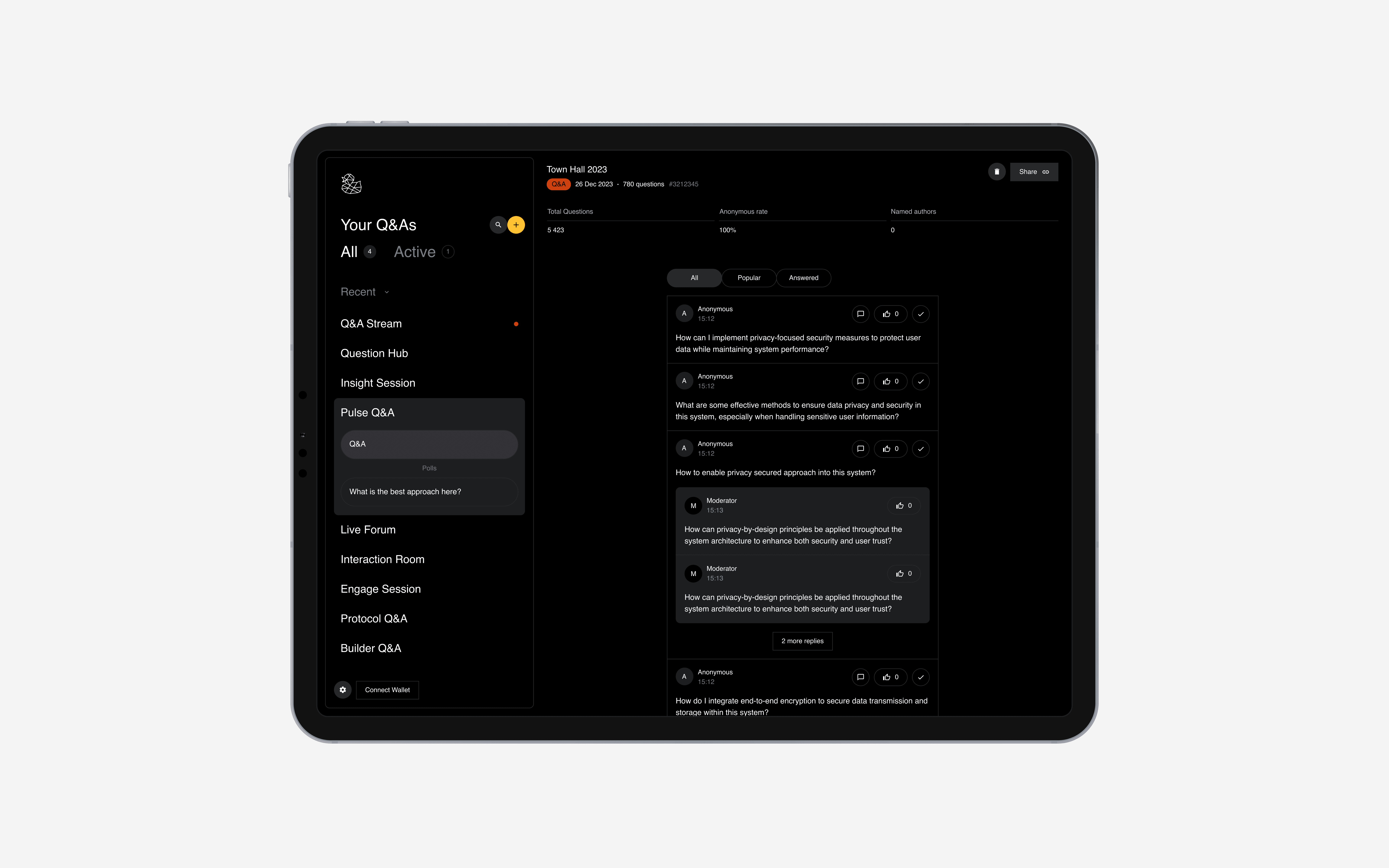
Desktop Manage Q&A
Desktop Manage Q&A
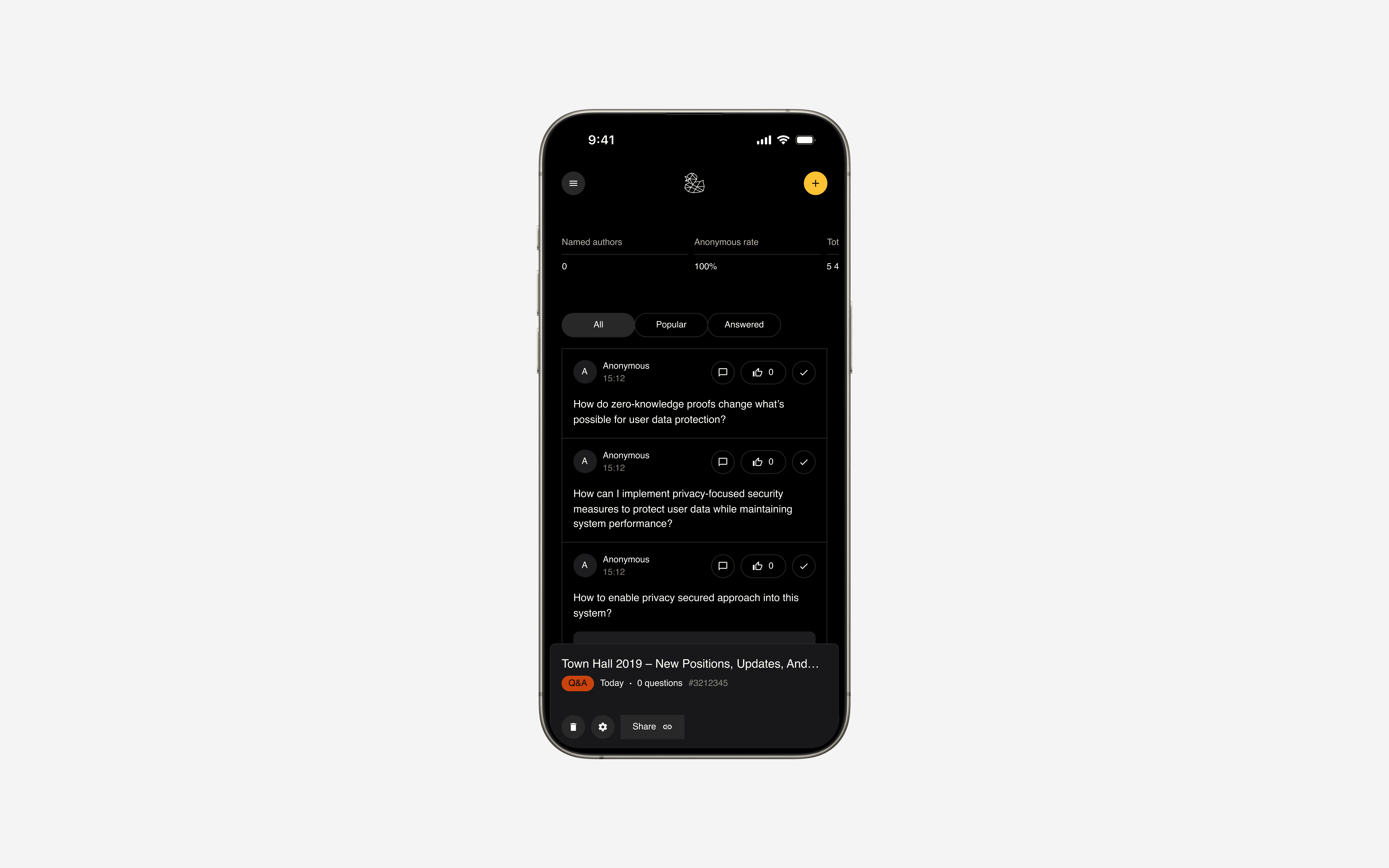
Mobile Manage Q&A
Mobile Manage Q&A
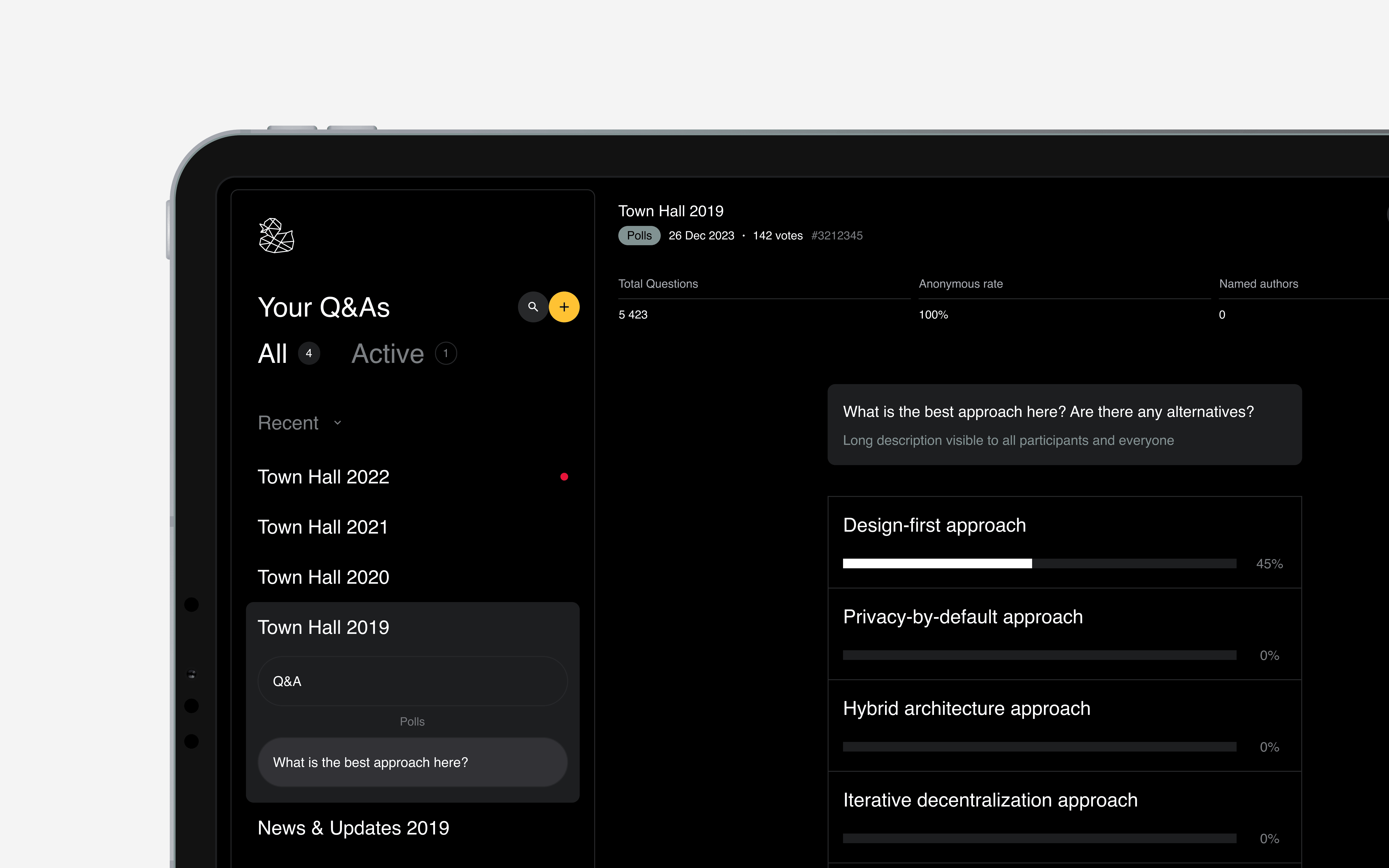
Manage Polls
Manage Polls
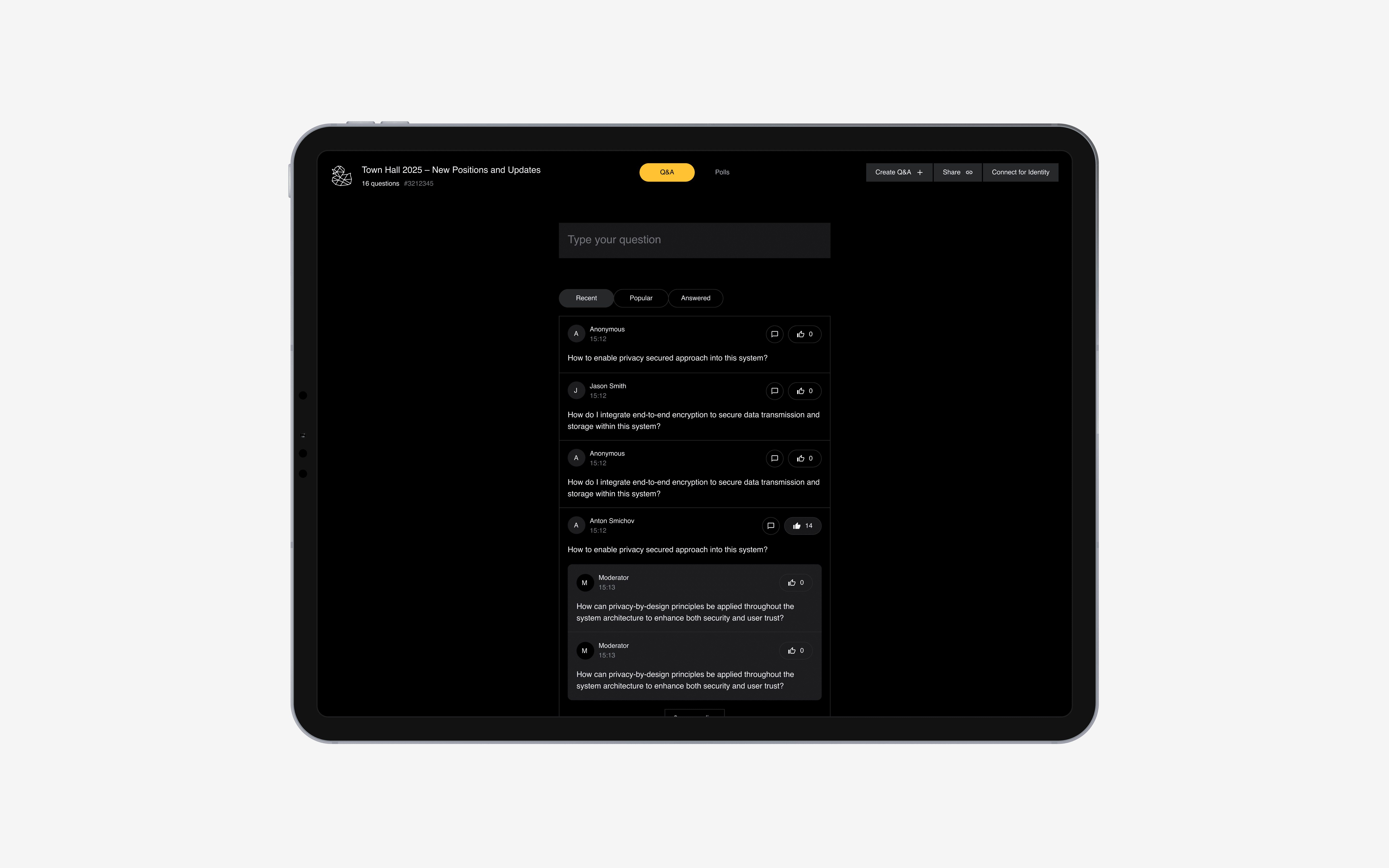
Participant View Q&A
Participant View Q&A
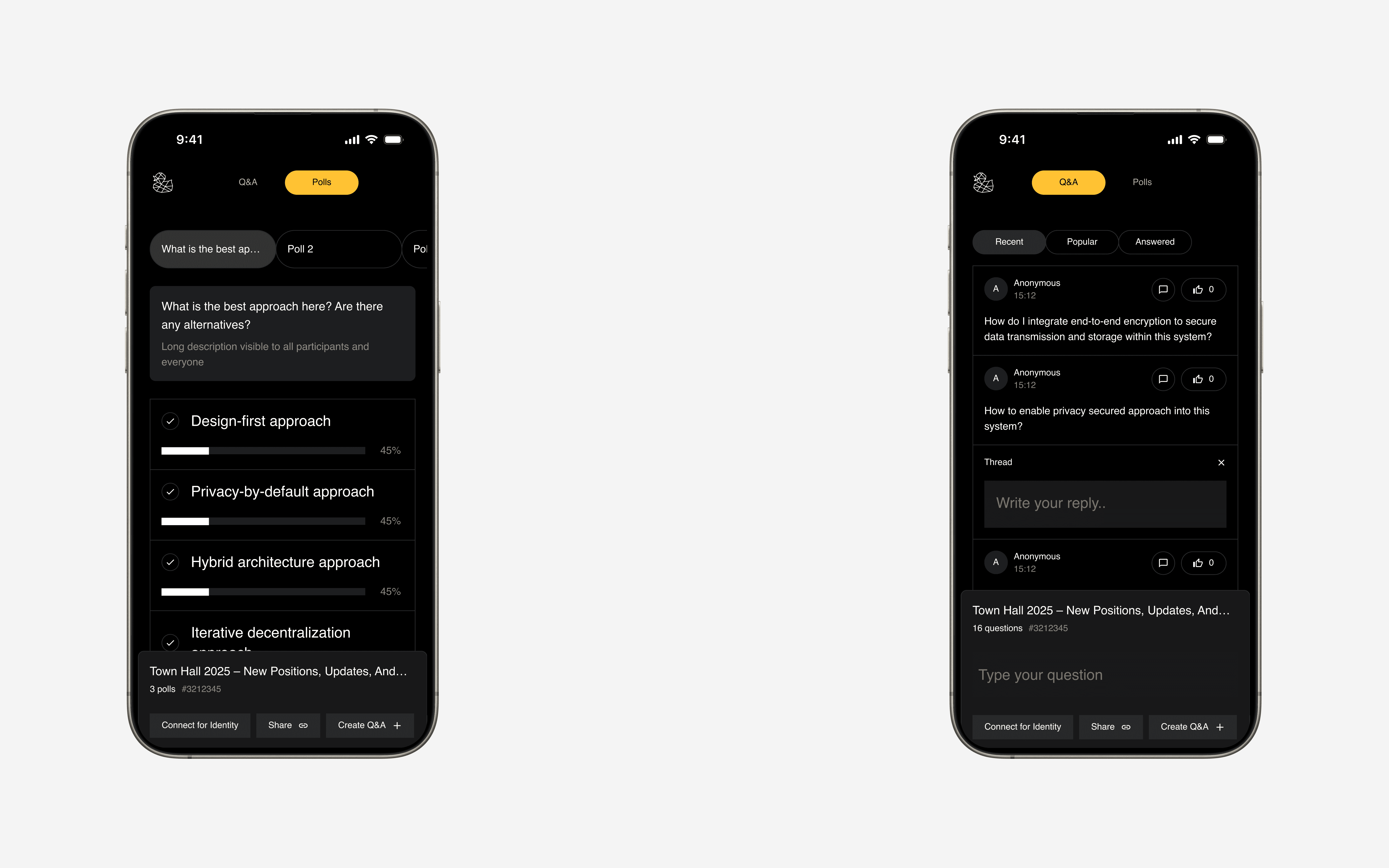
Mobile manage Q&A
Mobile manage Q&A
Results
Results
The redesign was completed and fully implemented by the development team. Core UX problems from v1 were resolved — role ambiguity addressed through separated flows, creation friction reduced through progressive disclosure, and navigation consolidated into a clearer structure.
The product was used for internal Q&A sessions within the organisation, validating the core interaction model. A scalable, token-based design system was established, adaptable for future Qaku and Waku-related initiatives. Full public release was paused due to shifting priorities on the product roadmap.
The redesign was completed and fully implemented by the development team. Core UX problems from v1 were resolved — role ambiguity addressed through separated flows, creation friction reduced through progressive disclosure, and navigation consolidated into a clearer structure.
The product was used for internal Q&A sessions within the organisation, validating the core interaction model. A scalable, token-based design system was established, adaptable for future Qaku and Waku-related initiatives. Full public release was paused due to shifting priorities on the product roadmap.
All Rights Reserved
All Rights Reserved
All Rights Reserved